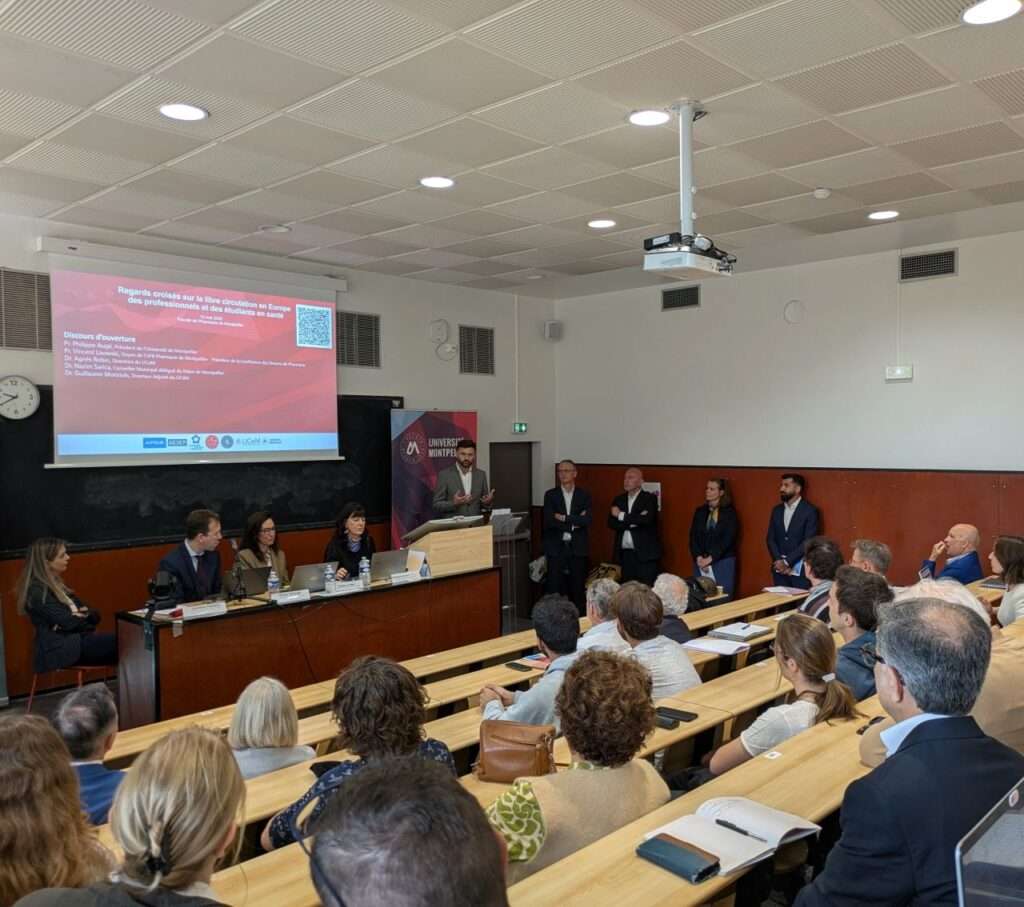
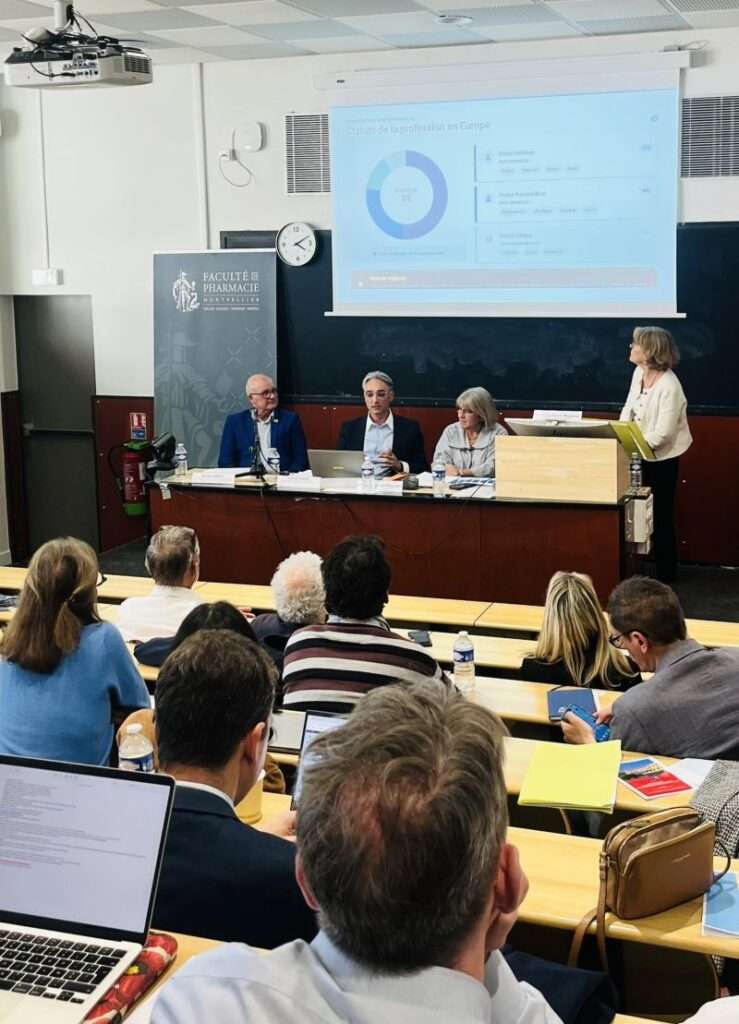
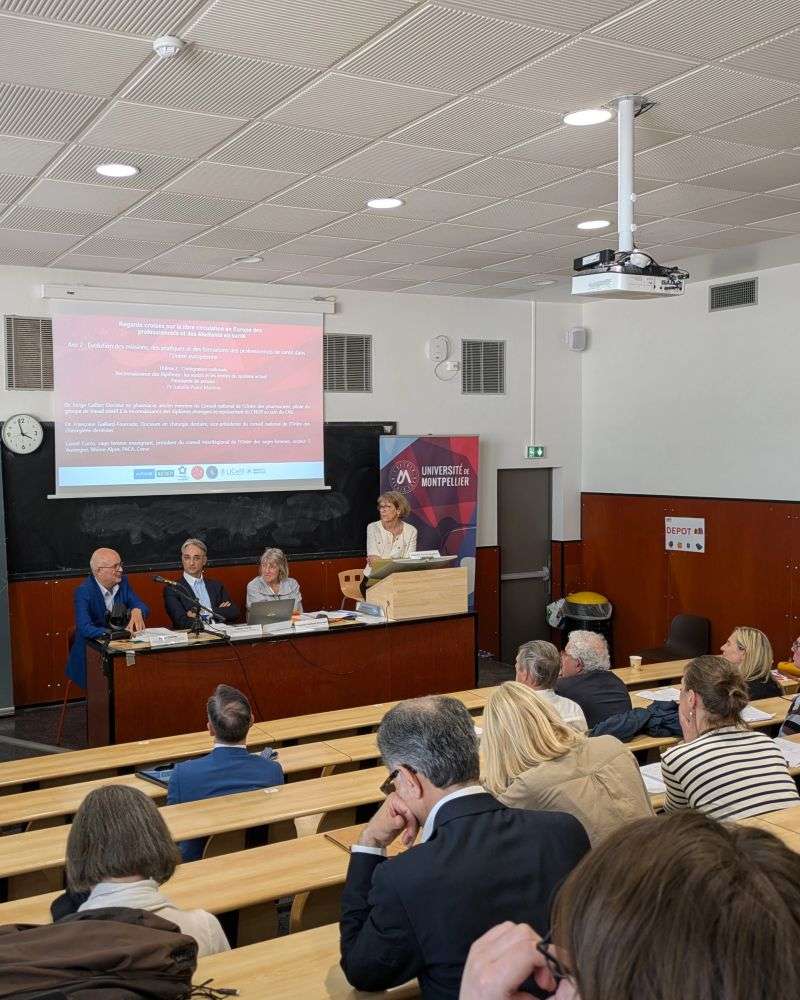
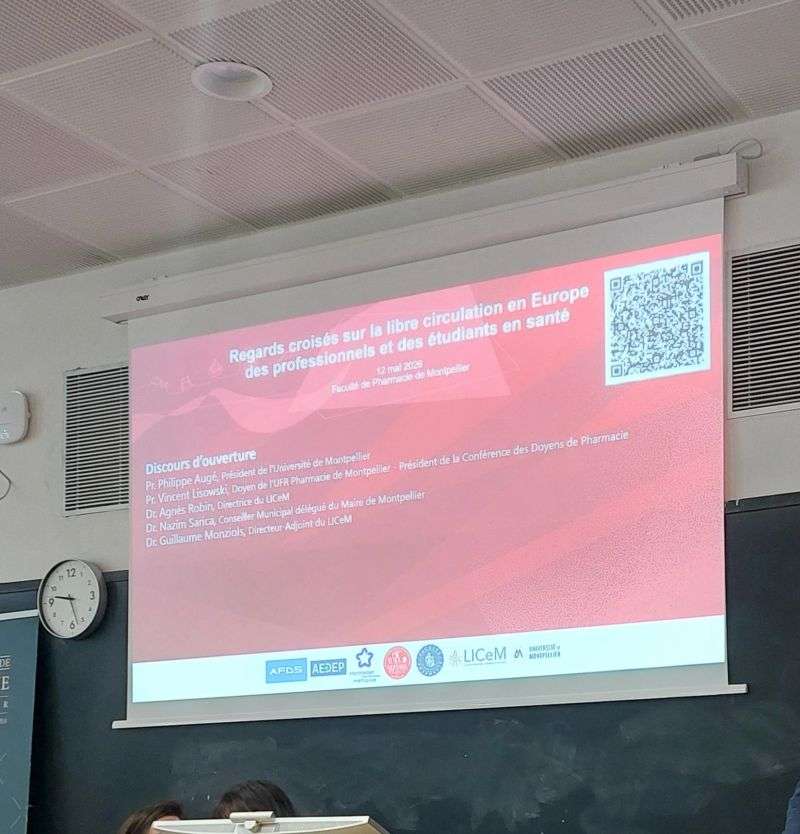
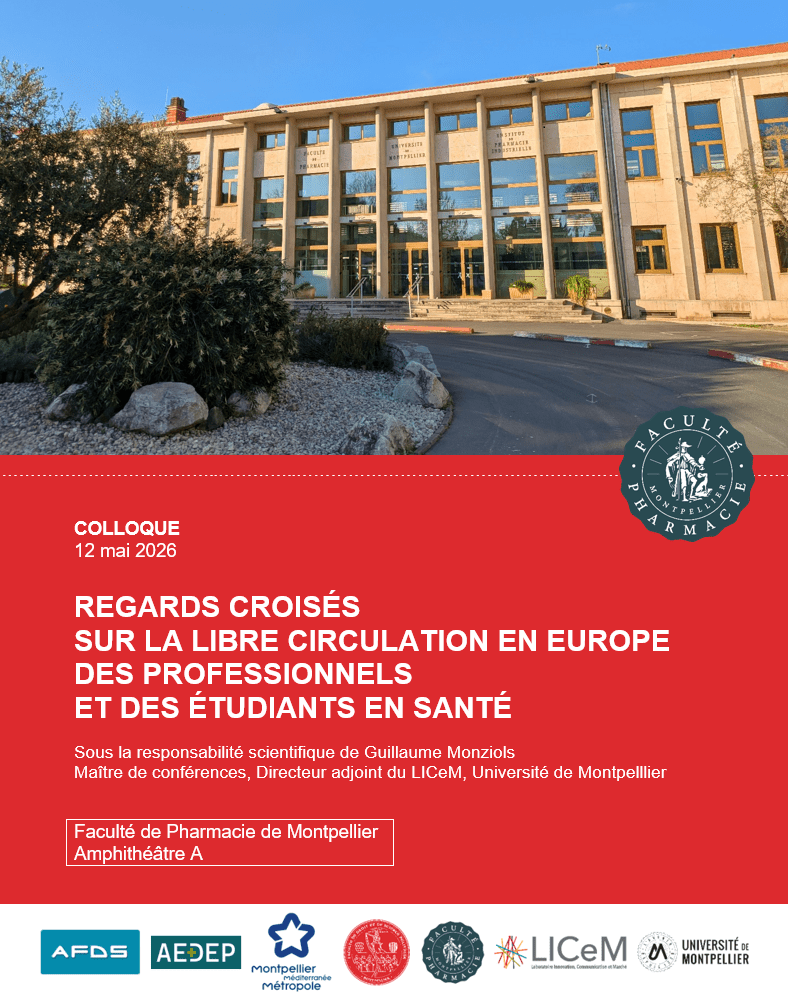
Different Perspectives on the Free Movement of Healthcare Professionals and Students in Europe
Conference – May 12, 2026
Organized by Guillaume Monziols and LICeM
The mobility of healthcare professionals in Europe is changing the availability of healthcare in Member States. In France, according to recent data from DREES, a growing proportion of physicians, pharmacists, dental surgeons, and midwives were trained abroad, primarily within the European Union. This mobility is governed by the amended Directive 2005/36/EC, which establishes the automatic mutual recognition of professional qualifications for so-called “sector-specific” health professions. The diversity of roles and competencies among health professions has long raised questions regarding the coordination of minimum training requirements, which form the basis for automatic mutual recognition in Europe. In France, for example, pharmacists are now more involved in preventive care through the prescription and administration of vaccines, while midwives are being entrusted with certain procedures previously reserved for physicians. Law No. 2025-580 of June 27, 2025, aimed at encouraging the return of French students trained abroad, illustrates the need to more closely align European mobility with national integration.
Against the backdrop of efforts to reorganize access to healthcare in several Member States, this symposium aims to analyze the strengths and limitations of the current system of automatic mutual recognition of sector-specific health professions.
The discussion will focus on two main areas: first, the legal foundations of professional mobility and their impact on healthcare systems; and second, the implications of changing roles and training for healthcare professionals on the mutual recognition of professional qualifications.
Scientific Advisory Board
. Cécile Le Gal, University Professor, LICeM, University of Montpellier
. Hélène van den Brink, University Professor, IDRT-santé, Paris-Saclay University
. Olivier Debarge, University Professor, CRDT, University of Reims Champagne
. Deborah Eskenazy, Associate Professor, IDRT-santé, University of Paris-Saclay
. Guillaume Monziols, Associate Professor, LICeM, University of Montpellier
. Georges Justice Essosso, Assistant Professor, LICeM, University of Montpellier
Program: