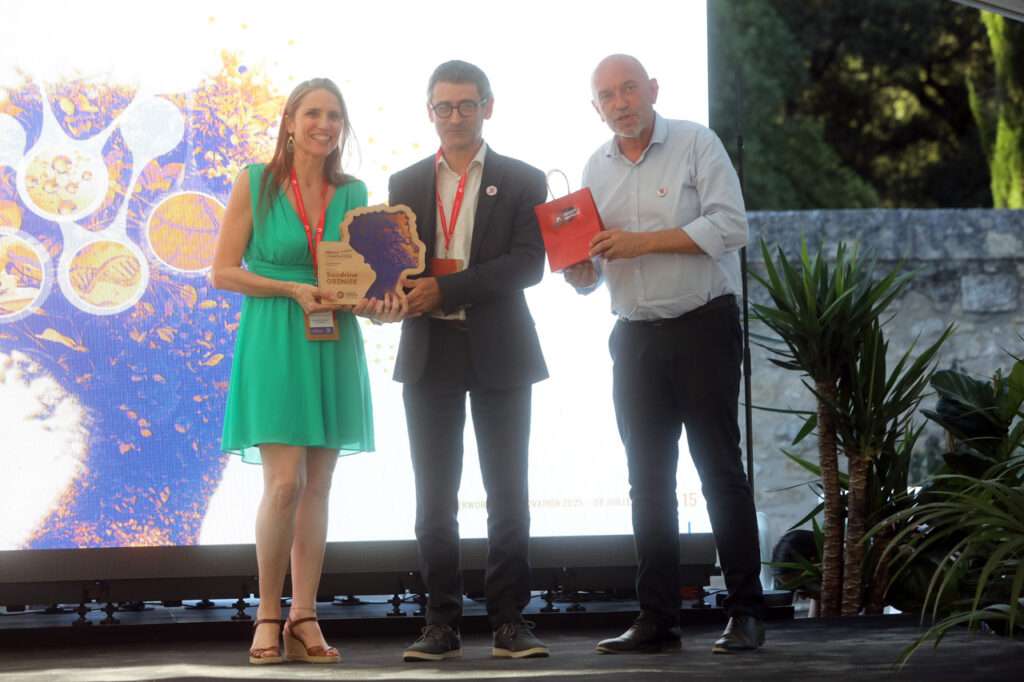
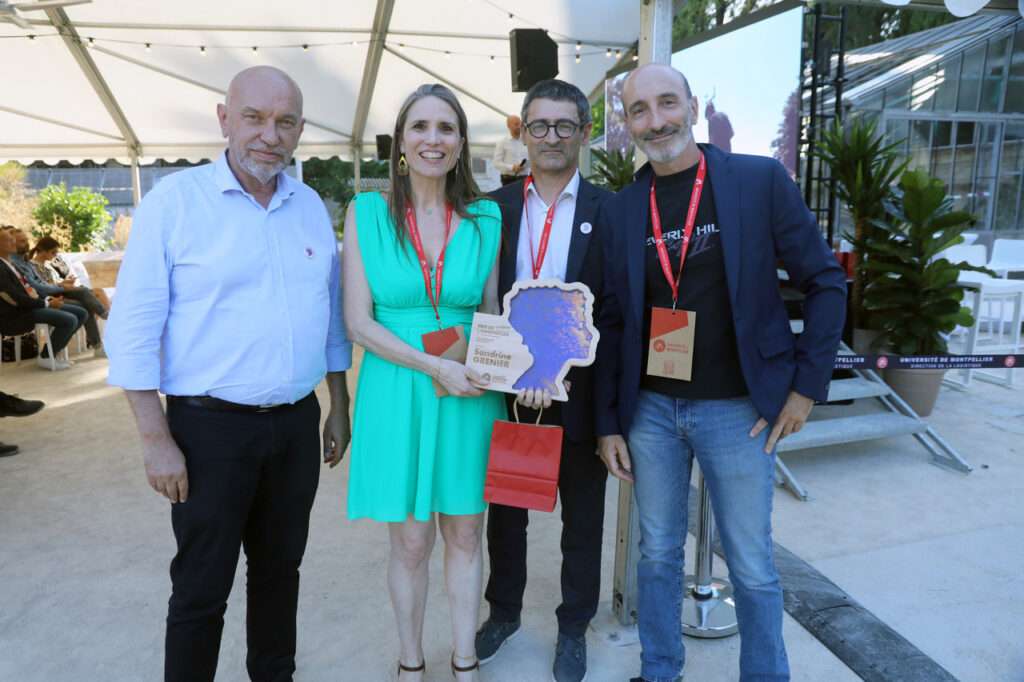
Sandrine Grenier, Winner of the University of Montpellier’s 2025 Innovation Award
LEARNING DIFFERENTLY: LAW AND FILM
UM Innovation Award 2025 from the Social Sciences Research Cluster
▶ The “Learning Differently: Law and Film”project is part of an annual course and is designed to be broken down into several subprojects, one per academic year. The goal is to offer a different approach to law and to convey academic knowledge—which students often find difficult—in an indirect and playful way. Film was chosen as a tool for this approach to teaching, with the goal of conveying legal knowledge and/or facilitating methodological understanding through the creation of aesthetically pleasing images. The project was launched during the 2023–2024 academic year.
" Learning Differently: Law and Film" is organized by Sandrine Grenier, an associate professor of private law at the Béziers University Institute of Technology (IUT), in the Marketing Techniques department, and a member of LICeM, and Sandy Blanco, a professor of film and audiovisual studies at the Béziers University Institute of Technology (IUT).

To date, the project has two versions:
The Red Satin Chrysalis (Medium-length film)
Stops in Pictures (Short films)
▶ The Red Satin Chrysalis
The first is the production of a medium-length film in theGiallo genre—an Italian crime film that enjoyed great success in the 1970s, characterized by its very distinctive aesthetic that has endured in films and commercials. Armed with a solid understanding of the fundamental principles of criminal procedure and having watched classic films centered on trials, the students immersed themselves in the complexities of criminal trials through the production of the medium-length film:“La Chrysalide de Satin Rouge.”The project was based on cross-disciplinary and multidisciplinary work (law, audiovisual studies, and commercial communication), which allowed students to immerse themselves in the writing and production of a film sequence and to refine their legal knowledge by mastering the criminal trial process. Designed to be innovative and interactive, the audience can, for a moment, become a grand jury and be invited to participate.
This project was undertaken with the aim of bringing together a wide range of partners—all of whom are volunteers, whether from institutions or the private sector—to foster mutual enrichment and visibility (among other things: to provide filming locations or costumes: the cities of Agde, Béziers, Pézenas, and Montpellier; the Faculty of Law and Political Science at Montpellier; the Béziers Judicial Court; the Montpellier Court of Appeals; the Montpellier Bar Association’s Artistic Branch; the South Central Bar School; and the fashion houses Caroline Bouvier and Le P’tit Grain de Mil). The idea of bringing together legal, technical, and artistic talents around a shared project—while also showcasing the architectural and cultural heritage of our region—was another driving force behind the project (filming took place at the Faculty of Law and Political Science in Montpellier, the Pézenas Municipal Theater, the Vulliod Museum in Saint-Germain-de-Pézenas, the Fayet Museum in Béziers, the Old Cemetery in Béziers, the Hôtel La Prison in Béziers, and Château Laurens in Agde).
▶ Movie Trailer
▶ Highlights in Pictures
The second approach involved focusing specifically on the exercise of reading and understanding a court decision—a task traditionally dreaded by beginners and/or non-specialists, given the specific nature of the writing style and the legal vocabulary used. In light of these challenges, the idea of using film to make reading a court decision more accessible and to inspire students to understand the legal issue raised and the solution applied by the judges was once again proposed. So far, six rulings have been selected by the students and adapted into short films lasting less than four minutes (three rulings from the Criminal Chamber of the Court of Cassation, one from the Labor Chamber, and two from theFirst Civil Chamber).
▶ Three court decisions are available online:
Moullec, Criminal Division of the Court of Cassation, November 8, 1972
Fragonard, First Civil Chamber of the Court of Cassation, March 24, 1987
Lacour, Criminal Division of the Court of Cassation, November 25, 1962
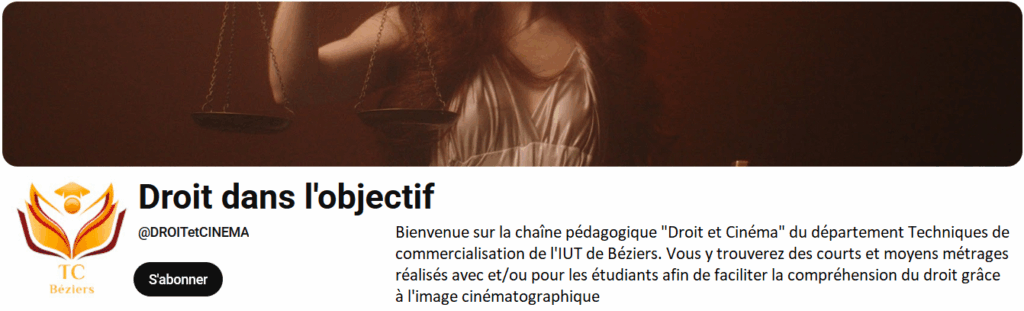
▶ Three more video stops are currently in post-production and will soon be posted on the YouTube channel Straight to the Point specifically created for the “Law and Cinema” project of the Marketing Techniques department at the IUT in Béziers. They will be available for other students to watch, who, thanks to a fun approach to the court ruling, will also be able to immerse themselves in reading and understanding it.
▶ The " Droit dans l’objectif" channel
https://www.youtube.com/@DROITetCINEMA
Photos from the award ceremony – credit: Étienne Perra – University of Montpellier